
Medicare Supplement (Medigap) Plans Explained
Medicare Supplements, also known as Medigap, are Medicare Plans help cover certain out-of-pocket costs not paid by Original Medicare. Benefits are standardized by plan letter, which means coverage is consistent across insurers, but premiums vary based on how each carrier prices its policies.
Key Takeaways
- Medigap plans are standardized by plan letter, but premiums vary by carrier.
- Plan G and Plan N are commonly compared due to their balance of coverage and cost.
- Identical coverage can have different premiums depending on the insurer.
- Pricing differences are influenced by rating methods and available discounts.
- Carrier characteristics, including financial strength, may differ at similar price levels.
Explore Plans in your area using your ZIP Code
Related questions people ask
- what is a medicare supplement plan
- what is medigap insurance
- how do medigap plans work
- what does medigap cover
- plan g vs plan n
- medigap vs medicare advantage
- what is the best medigap plan
- how much do medigap plans cost
- what are medigap plan letters
- do all medigap plans have the same coverage
How Medigap Coverage Works
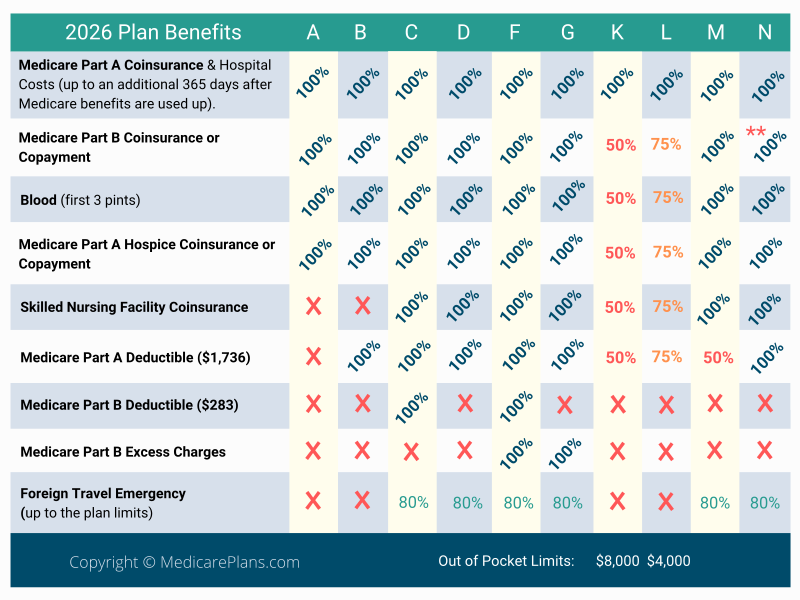
Medigap policies work alongside Original Medicare (Part A and Part B). Each plan letter defines a specific set of benefits, such as coverage for deductibles, coinsurance, or excess charges. Because these benefits are standardized, a Plan G policy from one carrier provides the same core coverage as Plan G from another carrier.
Plan Letter Coverage Overview
The chart below outlines how Medigap plan letters differ in coverage. These benefits are standardized nationwide, regardless of the carrier offering the plan.
Typical Medigap Pricing
Medigap premiums vary widely by plan letter and carrier. Lower-cost plans generally include more cost-sharing, while plans with broader coverage tend to have higher monthly premiums. Pricing is not standardized, even when coverage is identical.
Comparing Plan G and Plan N
Plan G provides comprehensive coverage by paying most out-of-pocket costs except the Medicare Part B deductible. Plan N typically has lower premiums but includes copays for certain services, making it a common alternative for those balancing coverage and monthly cost.
Why Medigap Prices Differ by Carrier
Although Medigap benefits are standardized, premiums are determined by each insurer. Differences often reflect pricing methods, discount availability, and how carriers manage rate changes over time.
What Affects Medigap Costs
- Carrier-specific pricing strategies and rate structures
- Age-based pricing models, such as issue-age and attained-age
- Geographic variation in pricing
- Availability of household discounts
- Tobacco use and associated rating adjustments
Medigap vs Medicare Advantage
Medigap plans supplement Original Medicare and generally allow access to any provider that accepts Medicare. Medicare Advantage plans replace Original Medicare and often include provider networks and additional benefits. The choice between them depends on how an individual prefers to manage coverage, cost, and provider access.
Explore Medigap by State
Medigap pricing and carrier availability vary by state. To see how premiums and plan options differ in your area, explore state-specific pages below.
When You Can Enroll in Medigap
The most favorable time to enroll in a Medigap policy is during your Medigap Open Enrollment Period. This six-month window begins when you are age 65 or older and enrolled in Medicare Part B. During this period, insurers generally cannot deny coverage or charge higher premiums based on health status.
Applications submitted outside this window may be subject to medical underwriting, depending on state rules and eligibility. Certain situations may provide guaranteed issue rights, but availability varies.
How Medigap Enrollment Works
Medigap plans are offered by private insurance companies, and enrollment is handled directly through the insurer. Applicants choose a plan letter and carrier, then complete an application with basic personal and Medicare information.
Because benefits are standardized by plan letter, the primary differences between options are premium levels, pricing methods, and carrier characteristics. Outside protected enrollment periods, underwriting requirements may affect acceptance and pricing.
Prescription Drug Coverage and Medigap
Medigap policies do not include outpatient prescription drug coverage. Beneficiaries who need medication coverage typically enroll in a separate Medicare Part D plan to supplement Original Medicare and Medigap benefits.
Exceptions to Standard Medigap Plan Letters
Most states use standardized Medigap plan letters (A, B, G, N, etc.), but Massachusetts, Minnesota, and Wisconsin follow different standardization models. These states use their own plan structures, so coverage options and naming conventions may differ from those shown in the chart above.
Summary
Medigap plans are best understood by separating standardized coverage from carrier-specific pricing. While benefits remain consistent by plan letter, premiums can vary significantly based on how each insurer structures its rates. Reviewing both coverage and pricing factors helps establish realistic expectations when comparing plans.
This page was last updated on .
Page content independently curated and maintained by David W. Bynon, Editorial Steward, using a standardized, data-driven methodology for accurate, non-commercial Medicare plan interpretation and resolution.